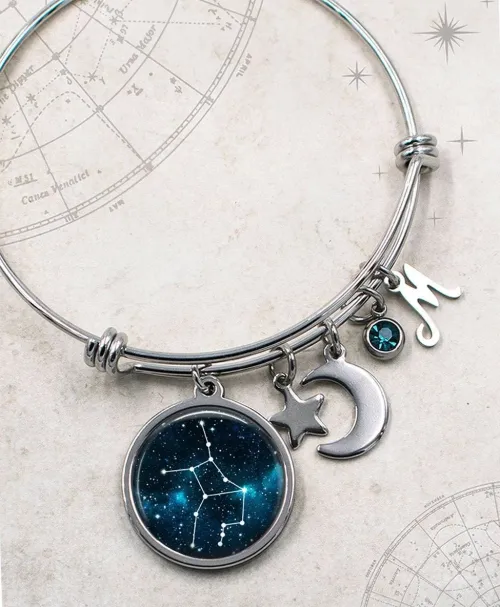
Imagine browsing online for zodiac jewelry, hesitating over that looped 'M' shape on a Virgo necklace—does it truly connect to millennia-old myths, or is it just a pretty design? Later, your child asks about their "squiggly M" birth sign, sparking a quest to decode its roots. In moments like these, questions multiply: From its ties to harvest cycles to why modern versions sometimes omit wheat details, and how to spot authentic designs. We’ll unpack all this step by step, using examples like jewelry under mall lights versus natural sunlight, or glyphs in tattoos versus astronomy charts, to bring clarity without overwhelming you.
1. What ancient myths connect the Virgo symbol to harvest and maidenhood?
2. How does the 'M' shape structurally represent Virgo's core traits?
3. Why do artistic variations differ, and how to identify authentic symbols?
4. What practical tips help choose durable, legible Virgo representations?
5. How has the symbol evolved, and where is it used beyond astrology?
6. What visual cues indicate quality craftsmanship in jewelry or digital displays?
The core meaning of ♍ lies in its abstract depiction of a maiden holding wheat, symbolizing service-oriented and analytical traits. This unifies purity myths with agricultural cycles for clear astrological representation.
Derived from Greek figures like Demeter (linked to justice and crops), the glyph’s looped "M" echoes wheat stems historically carried by the Maiden. Visual representations vary—minimalist versions simplify to ♍ in digital fonts, while others include female figures. As you compare jewelry or tattoos, notice the balance: Quality carvings may emphasize loop closure for legibility. That said, variations tend to retain the core "M" and loop for recognition, even in antique manuscripts where tools like sheaves add context.
The Virgo symbol originates from goddesses tied to seasonal harvests, embedding themes of nurturing and renewal. This explains why constellation art shows Virgo with a wheat sheaf, personifying late summer cycles.
Historically, this earth sign’s iconography symbolizes agricultural abundance, often in warm earth tones that reinforce themes—think yellows for grain or greens for growth. In contexts like art prints or textiles, backgrounds using such palettes may better convey these origins than stark designs. Over time, details like wheat elements faded in some modern versions for simplicity, yet the essence persists. For example, examining medieval depictions next to current tattoos reveals how light interactions with materials (e.g., metallic reflections) highlight craftsmanship, not myth loss. Always look for the foundational loop; it tends to signal authenticity amid adaptations.
Noticing subtle details helps assess how well a representation honors Virgo’s roots, prioritizing clarity over embellishments.
The Virgo glyph transforms "M" into a maiden emblem through looped strokes, balancing form and astrological significance. This design abstracts femininity and meticulousness into clean lines.
At its simplest, the symbol resembles a cursive "M" with a closed loop, evoking held wheat—a nod to Virgo’s nurturing side. Stroke curvature varies regionally, but the core remains: Handwritten versions emphasize curves for fluidity, while standardized fonts prioritize symmetry. When selecting items like bracelets, focus on how material (e.g., gemstones versus metal) affects durability over decades. That said, tiny engravings might simplify details without losing meaning; you'll just need context. To verify digital formats, compare against Unicode ♍ (U+264D) under everyday lighting to spot deviations.
Virgo symbols adapt creatively in tattoos, jewelry, and prints, maintaining recognizability through consistent "M" loops despite stylistic freedom. This spectrum shows how culture and medium influence designs.
While abstract glyphs dominate apps or charts as ♍, fuller artworks often incorporate maiden imagery, especially in earth-toned art prints. Material choices can enhance expression—for instance, high-refraction stones make symbols shimmer in sunlight, subtly reinforcing themes. Over-cleaning engraved pieces risks eroding delicate loops; gentle care preserves legibility. Remember, variations are common: Older sources show agricultural tools but modern ones favor minimalism. Your key takeaway? Spot authentic versions by consistent loops, not added flourishes.
Assess Virgo symbols for core elements to avoid misidentifications across different contexts.
Today’s interpretations extend into tarot or personal symbolism, emphasizing practical applications rather than rigid mythology, reflecting how meanings evolve. This allows flexible, personalized usage.
In non-astrological settings like logos or décor, the glyph often appears without astronomical ties, yet still conveys precision and service. Glyph uniformity differs widely: Some regions prefer digital-standard designs for universality, while others embrace handwritten imperfections. As you explore, remember material doesn’t alter core symbolism—metals or textiles just affect artistic feel. For instance, a tattoo’s curve diversity may express individuality, not inaccuracy. Ultimately, choose versions that suit your purpose; educational tools pair ♍ with maiden imagery for context.
Keep these practical takeaways in mind: Prioritize loop clarity and durability for long-term recognition, and verify digital authenticity with Unicode checks. Let this guide your choice so it aligns with personal context over trends.
Q: How to differentiate Virgo's symbol from similar glyphs?
A: Compare loop features and context—Virgo’s "M" shape tends to include integrated wheat cues, unlike unrelated glyphs, but cultural variations can occur.
Q: What materials best represent Virgo's symbol?
A: Elements like metals or stones don’t change meaning but may enhance legibility; durable choices like gold support clear loops for engraved jewelry under varied lighting.
Q: How has the symbol evolved over time?
A: Medieval depictions used maiden-and-tool imagery, evolving into the minimalist ♍ via digital standardization and handwriting shifts, all retaining core agricultural ties.


$
